The old way of building integrations assumes complexity stays flat as your connector catalog grows. It doesn't. Every new connector is a new surface area to monitor, patch, and sometimes rebuild from scratch when a vendor decides to restructure their auth flow. Here's how open-source connectors and Python transformations change that math for B2B SaaS teams.
TLDR:
- IT teams spend 39% of their time building custom integrations, leaving little room to ship actual product features
- Open-source connectors (Singer, Airbyte) give you full code visibility and control; black-box connectors leave you filing support tickets
- Python transformations handle the real ETL work: field normalization, multi-source joins, and tenant-specific logic that visual builders can't manage
- 84% of businesses call integrations a key purchase requirement, making your connector catalog part of your product's first impression
- Hotglue runs embedded ETL on a per-tenant pricing model with open-source connectors and native support for on-premise systems like QuickBooks Desktop
What Embedded ETL Actually Means for B2B SaaS Products
Embedded ETL sounds like a backend infrastructure term, and for most of its history, it was. Traditional ETL pipelines exist to feed internal analytics: pull data from production databases, normalize it, load it into a warehouse, let analysts run queries. That whole chain runs invisibly, for internal consumers, and your end users never interact with it.
Embedded ETL is different. The pipeline lives inside your product, running on behalf of each customer. When a user in your SaaS app connects their QuickBooks account and their invoices start flowing into your system, that's embedded ETL. You built the pipe; they triggered it; their data moved through it.
For B2B SaaS, this distinction matters. Your customers don't care about your data warehouse. They care whether your product talks to the tools they already use. Embedded ETL is how you make that happen without rebuilding a connector from scratch every time a new accounting system or CRM shows up on a customer's requirements list. For more context, see what embedded iPaaS actually means.
Why the Old Integration Playbook Breaks Down at Scale
Building one integration in-house is manageable. Building ten is a maintenance job. Building twenty starts consuming your roadmap, along with your engineers' will to live.
The hidden cost isn't the initial build. It's everything that comes after. Third-party APIs change endpoints. Schemas drift between customers. One tenant running a Shopify connector plus Loop Subscriptions might need a connector rebuild that a vanilla Shopify customer never triggers. Each variation compounds, and your engineers spend more time patching integrations than shipping features that grow revenue. That's a core reason building user-facing SaaS integrations yourself rarely pays off.
According to the 2025 Salesforce/MuleSoft IT benchmark, IT teams spend 39% of their time building custom integrations. That's nearly half an engineering org's capacity going toward work that rarely makes it onto a product changelog.
Every new connector you add is a new surface area to maintain, monitor, and rebuild when an upstream API decides to restructure its authentication flow six months from now. The old playbook assumes integration complexity stays flat as your catalog grows. It doesn't.
Open-Source Connectors vs. Black-Box Connectors
Most embedded iPaaS integration platforms ship connectors as compiled binaries or vendor-managed black boxes. You get the functionality, but no visibility into how it works, and no recourse when it breaks in a way the vendor hasn't gotten around to fixing.
Open-source connectors work differently. The Singer protocol defines connectors as composable scripts: "taps" that extract data and "targets" that load it. Any tap can pipe into any target. The spec is language-agnostic, lightweight, and auditable. Airbyte's YAML-based connector format follows a similar philosophy.
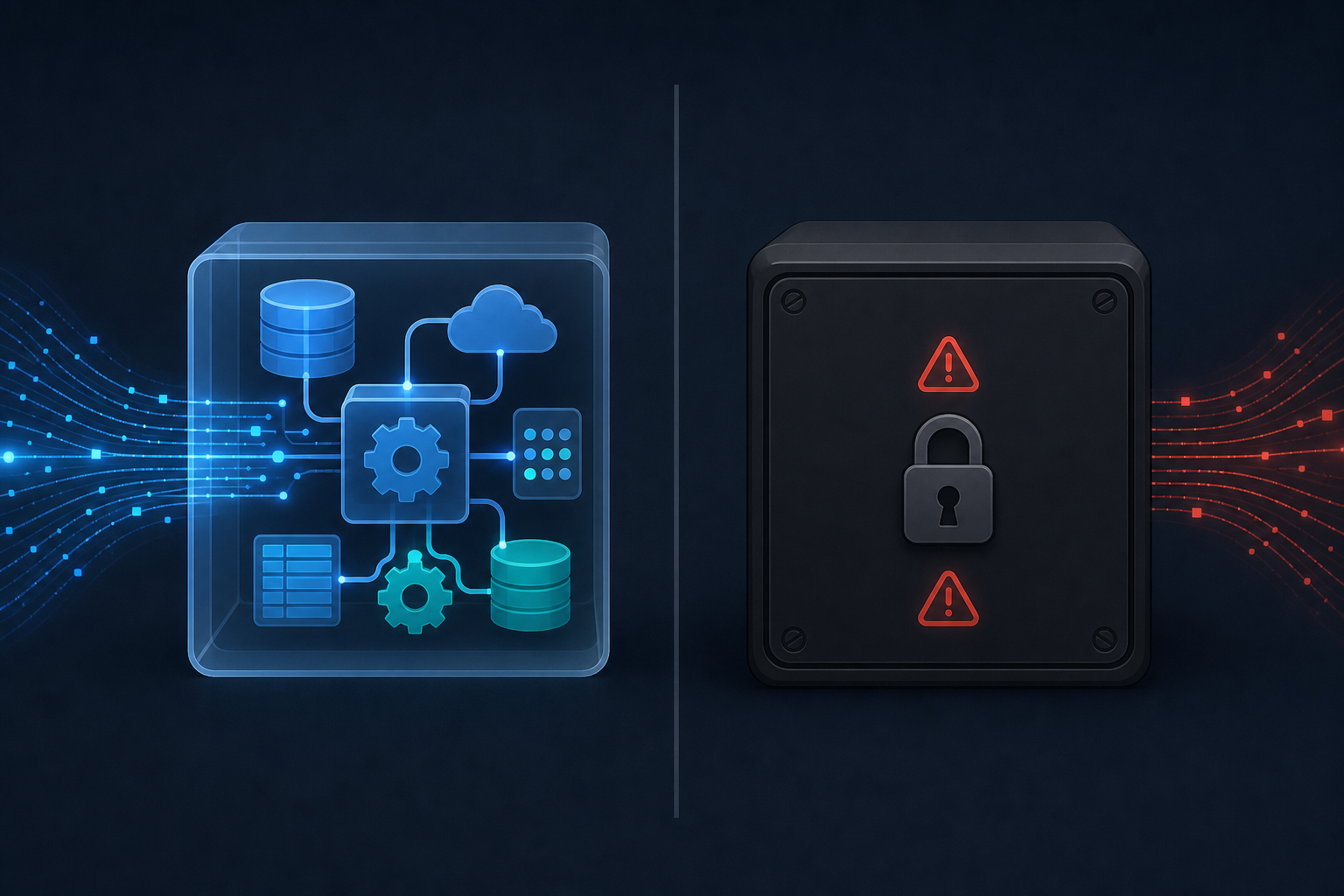
The practical difference is control. When a QuickBooks endpoint changes, you can read the connector code, understand what broke, and fix it yourself. With a black-box connector, you file a support ticket and wait.
That said, tradeoffs do exist:
- Community-maintained connectors vary in quality and update frequency, so vetting before production use is worth the time.
- Vendor-managed connectors often carry reliability guarantees and SLAs, which matters if your team lacks bandwidth to maintain connectors internally.
- Open-source breadth can outpace proprietary catalogs, but some connectors are effectively abandoned.
For product teams, the real question is whether you want your integration reliability tied to a vendor's internal roadmap. Open-source gives you an exit. Black-box connectors don't.
Python Transformations as the Backbone of Flexible ETL
Raw data coming out of a connector is rarely ready to use. Field names differ across tenants, nested JSON needs flattening, and two sources may need joining before the result is useful to your backend. Transformation logic is where most of the real work lives.
Python became the default for this work because its data tooling is genuinely good. Pandas handles tabular transformations well. Dask scales those same operations across larger datasets without requiring a different API. You can write a join across Salesforce contacts and QuickBooks invoices in the same script you'd use to normalize a messy JSON payload, using the hotglue Salesforce connector to pull that data in.
Visual builders break when you need conditional deduplication, multi-source reconciliation, or logic tied to one tenant's data model. Low-code tools externalize the complexity without solving it.
With hotglue, transformation scripts run in a JupyterLab-powered workspace with Git-backed version control, so you can roll back if something misbehaves in production. If writing logic from scratch feels slow, GluestickAI can generate the Python code from a plain-language description of what you need.
Embedded ETL vs. Unified API vs. Workflow Automation
The table below maps the three approaches cleanly. Here is where each one tends to hold up and where it starts to crack.
Unified APIs trade connector depth for schema consistency. You get one normalized object for "contact" or "invoice" across many CRMs or accounting tools, which is genuinely useful for early-stage products moving fast. The tradeoff is that differences between a NetSuite connector and QuickBooks Desktop get abstracted away, sometimes incorrectly, and edge cases your customers actually hit are harder to debug.
Workflow automation tools optimize for user-built automations, not developer-built pipelines. At small scale, step-based builders work fine. At multi-tenant scale, you're managing thousands of individually configured workflows with no centralized transformation layer, and incident triage becomes painful.
Embedded ETL fits when your product needs to ingest a customer's full order history, sync bidirectionally with their ERP, or run nightly reconciliation against their payroll system. It is a worse fit if you primarily need lightweight real-time event hooks.
| Approach | Optimizes for | Breaks down when |
|---|---|---|
| Embedded ETL | Bulk, stateful, multi-tenant data movement | Real-time event triggers are needed |
| Unified API | Schema standardization across similar systems | Connector depth varies and edge cases leak through |
| Workflow automation | Quick, event-driven user-built automations | Logic gets complex or tenants number in the thousands |
Integrations as a Product Feature, Not a Back-Office Concern
According to the State of SaaS Integrations Report, 84% of businesses say integrations are "very important" or a "key requirement" for their customers. Only 1% said integrations are not important. At that threshold, integrations stop being a feature request and start being a purchase criteria.
Buyers review your integrations list before they look at your pricing page. In sales, CRM, and customer success software categories, integrations rank as a top-two buying consideration. Your connector catalog is part of your product's first impression.
Teams that treat integrations as back-office plumbing tend to learn this the hard way, usually when a deal stalls because a prospect needs a QuickBooks connector for Desktop and your product only syncs with QuickBooks Online.
Multi-Tenancy: The Requirement That Changes Everything
Running one data pipeline is an engineering problem. Running the same pipeline for thousands of customers, each with different credentials, different schemas, and different sync schedules, is an architecture problem and a CPO's recurring nightmare come roadmap planning season.
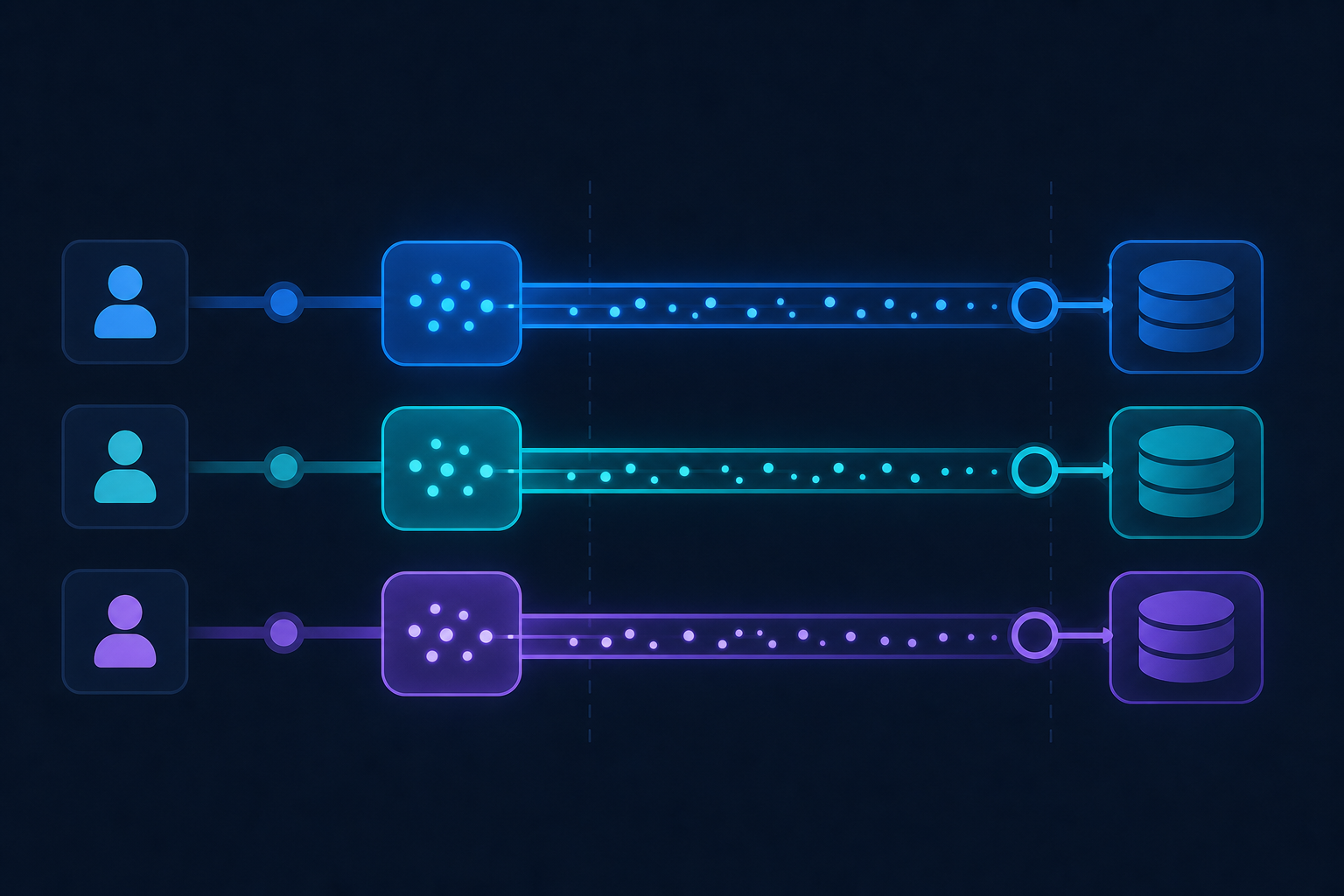
Consumer ETL tools assume one pipeline, one owner. Embedded ETL for B2B SaaS means every tenant gets isolated jobs, isolated state, and isolated failure handling. When a sync fails for tenant A, tenant B should never know it happened.
State management gets complicated fast. Incremental syncs require tracking a cursor per tenant, not a global watermark. Any tool that was not built for multi-tenancy tends to bolt this on later, and the seams show.
Pricing follows the same logic. Volume-based billing punishes you for growing your customer base, since more tenants means more rows means a bigger bill regardless of how much value each tenant extracts. Tenant-based pricing, where you pay per active connected customer instead of per record synced, makes costs predictable as you scale, which is a key factor when choosing the best embedded iPaaS solution.
Monitoring is the part most teams underestimate. In a multi-tenant deployment with thousands of active syncs, you need tenant-level job health beyond global status. Knowing that 98% of syncs succeeded is less useful than knowing exactly which two tenants failed and why.
On-Premise and Legacy Systems: The Connectors Nobody Wants to Build
Cloud-native connectors are the easy ones. Every iPaaS vendor has a Salesforce connector. The harder problem is the customer running their books on QuickBooks Desktop, or the construction firm on Sage 300 CRE, where there is no REST API, no webhook, and no cloud sync endpoint to call.
On-premise systems require a fundamentally different approach. Instead of an outbound HTTP call, you need a locally installed agent that reads from the database or intercepts the application's data layer, then relays that data out. That agent has to handle multi-user environments, survive software updates without breaking, and authenticate without exposing credentials over a public endpoint. Fun stuff, right?
Most embedded iPaaS vendors skip this entirely. The ones that don't usually hand you a DIY path and wish you luck.
Build vs. Buy: What the Real Decision Actually Costs
The initial build is what most teams budget for: the connector, the auth flow, the data mapping. What follows is where the real cost accumulates.
Third-party APIs change without warning. Schema fields get deprecated. Vendors introduce new authentication requirements. Each change requires someone on your team to notice, triage, and fix it, often under deadline pressure from a customer already experiencing broken syncs. Multiply that across twenty connectors and several hundred tenants, and you have a meaningful portion of engineering capacity spoken for indefinitely.
The decision framework is simpler than it looks:
- If you need one or two connectors and they rarely change, building in-house is defensible.
- If your roadmap requires ten or more connectors with distinct auth models and schema variations, the maintenance burden compounds faster than most teams staff for. See how to build a pipeline without tech debt.
- If customers span multiple verticals with different ERP or accounting systems, connector diversity alone makes the case for outside infrastructure.
Keeping connectors current as third-party APIs evolve typically requires at least one dedicated engineer once a catalog reaches meaningful size. That engineer is not building product. They are maintaining pipes.
Buy decisions are not about capability. Most product teams can build a QuickBooks connector. For a deeper look, read integrating QuickBooks with your SaaS platform. The question is whether you want to rebuild it every time Intuit changes an endpoint.
How hotglue Approaches Embedded ETL for B2B SaaS
Hotglue is built around the problems this article has been describing. Open-source Singer and Airbyte-compatible connectors give your team full visibility into the code. Python transformations run in a JupyterLab workspace with Git version control. Pricing is per active tenant, not per record, so growth doesn't surprise your finance team.
At 38,000+ active tenants and roughly 10 billion records processed weekly, the multi-tenant architecture has been stress-tested well past the point where seams show.
A few things that tend to matter once you're past the evaluation stage:
- New connectors go from API access to live in one to two weeks.
- On-premise systems like QuickBooks Desktop and Sage 300 CRE are supported natively, not handed off to a DIY path.
- GluestickAI generates Python transformation code from plain-language descriptions, cutting the time between "we need this field remapped" and "it's in production."
- Hotglue actively monitors third-party API changes and migrates connectors when upstream endpoints shift, with no engineering work required on your end.
If you're a CPO or Head of Partnerships trying to stop your engineers from spending half their time on connector maintenance, hotglue is the most complete embedded ETL platform built for multi-tenant B2B SaaS, and we'll stand up a proof of concept before any commercial commitment. Book a demo.
Final Thoughts on Embedded ETL for B2B SaaS Products
At scale, embedded ETL stops being a backend detail and starts being a product differentiator your buyers notice before they ever talk to sales. The teams that get ahead of this invest in open-source iPaaS connectors, clean Python ETL transformations, and multi-tenant architecture built for isolation from day one, not bolted on later. See how hotglue handles this before you commit to any approach.
FAQ
What is the difference between a unified API and embedded ETL for B2B SaaS integrations?
A unified API normalizes data across similar systems into one schema, which is useful for moving fast early on, but edge cases between, say, NetSuite and QuickBooks Desktop tend to leak through when connector depth varies. Embedded ETL runs a full extraction, transformation, and load pipeline per tenant inside your product, giving you control over field mapping, deduplication logic, and multi-source joins that a unified schema would abstract away or lose entirely.
How do I let my SaaS customers connect their own ERP or accounting system without my engineering team building each connector from scratch?
The answer is an embedded iPaaS with a pre-built connector library your team doesn't have to maintain. With Hotglue, over 650 open-source connectors (including QuickBooks Online, NetSuite, Sage 300 CRE, and Microsoft Dynamics 365) are available out of the box, and new connectors go from API access to live in one to two weeks, without your engineers owning the build.
Should I build integrations in-house or buy an embedded ETL solution for my B2B SaaS product?
If you need one or two connectors that rarely change, building in-house is defensible. If your roadmap requires ten or more connectors across different ERP, CRM, or payroll systems, each with their own auth models and schema variations, the maintenance burden compounds faster than most teams hire for, and you end up with one engineer permanently patching pipes instead of shipping product.
What embedded iPaaS platforms support AI agent and MCP authentication workflows?
Most embedded iPaaS vendors don't support Model Context Protocol yet. Hotglue does, and it handles MCP-based authentication workflows, so AI agents and LLM-based tools can authenticate with third-party systems through Hotglue connectors directly, which matters as more B2B SaaS products move toward agent-driven workflows that need live access to business systems.
How do Python ETL transformations work inside an embedded integration for multi-tenant B2B SaaS?
Python transformation scripts run per tenant, so one customer's Salesforce-to-QuickBooks join logic doesn't touch another's. Hotglue's JupyterLab-powered workspace supports Pandas and Dask for tabular and large-dataset transformations, with Git-backed version control so you can roll back a script that misbehaves in production. GluestickAI can also generate the transformation code from a plain-language description if writing it from scratch is the bottleneck.