Product teams considering Workato for customer-facing integrations usually hit the same wall: the pricing is steep, the UX exposes a third-party workflow builder to your customers, and the multi-tenant architecture your engineers need wasn't really part of the original design. Here's a straight look at where Workato falls short and what the alternatives actually offer.
TLDR:
- Workato averages $75,664/year for SMBs and was built for internal IT automation, not customer-facing integrations
- Embedding Workato in your product exposes a Zap-like workflow builder, making integrations feel third-party to your customers
- Purpose-built options like hotglue, Prismatic, and Paragon handle multi-tenant embedding in ways Workato was never designed to do
- hotglue offers white-label embedding, tenant-based pricing, 650+ open-source connectors, and Python pipeline transformation in one package
What Is Workato and How Does It Work?
Workato is an enterprise integration and automation tool built around a concept it calls "recipes." A recipe is essentially a workflow: a trigger fires, actions follow, and conditional logic branches the outcome based on whatever rules you define. It connects apps and data without requiring heavy coding, which makes it approachable for IT teams and business analysts who need to automate cross-departmental processes.
The intended audience is mid-to-large enterprise organizations. Think IT operations teams standardizing processes across HR, finance, and sales tools, not product engineers building customer-facing integrations. Workato is deployed as an iPaaS for internal automation, handling things like syncing employee records between Workday and Salesforce or routing support tickets across systems.
That context matters. Workato was designed for teams building automation workflows on top of SaaS tools, not for SaaS companies embedding integrations inside their own products for their customers. The distinction is subtle but consequential (like ordering a wedding cake and getting a very enthusiastic birthday cake instead), and it shapes nearly every tradeoff covered in the sections below.
Why Consider Workato Alternatives?
Workato's pricing is the first signal something is off for product teams. According to SpendHound, which tracks real contract data from actual customers, Workato's average SMB pricing is $75,664/year. That's a steep base before you've shipped a single customer-facing SaaS integration.
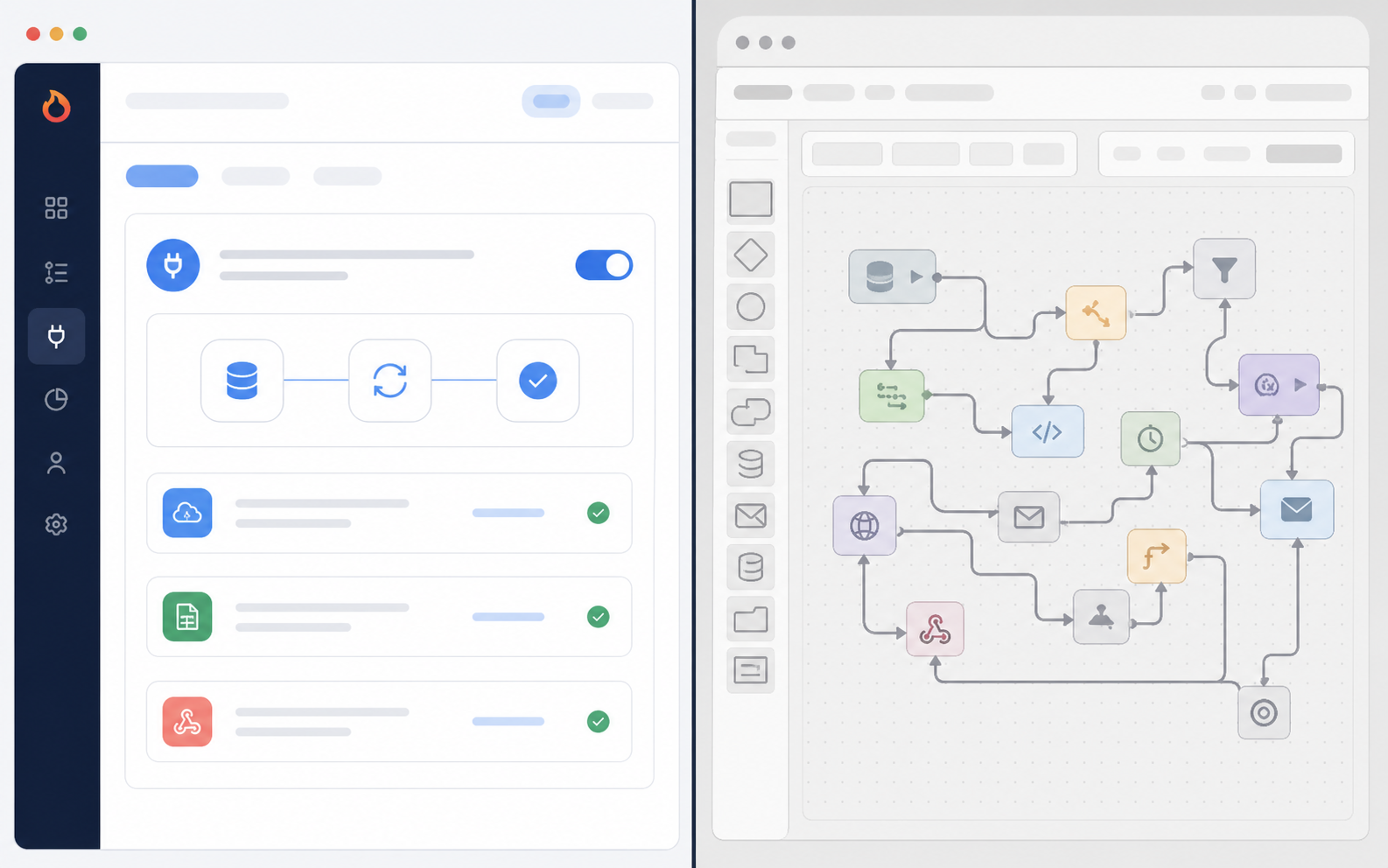
The cost is one thing. The UX problem is another. Workato's workflow builder is designed around internal automation, which means the interface your end customers interact with feels like exactly what it is: a third-party automation tool bolted onto your product. One prospect described building in Workato as "building a Zap or HubSpot workflow" instead of a native integration. When your customer is trying to connect their QuickBooks account inside your product, that distinction is immediately obvious to them.
There's also a fundamental design mismatch. Workato was built for IT teams running internal automation, not for B2B SaaS companies embedding multi-tenant integrations inside their own product for paying customers. The multi-tenant management, white-label UX, and tenant-scoped data handling that product teams need aren't afterthoughts Workato can easily accommodate. They require a purpose-built embedded iPaaS approach from the ground up. Typically, this decision lands on the CPO or Head of Partnerships (whoever owns the product roadmap and the partnerships that drive integration demand), with engineering looped in once a platform is shortlisted.
Best Workato Alternatives in September 2026
Each tool below sits at a different point on the range from "fully native embedded experience" to "internal automation builder". For a broader overview, see the different iPaaS integration platforms worth knowing.
Here is a quick breakdown of the most relevant options:
hotglue
The strongest fit for B2B SaaS product teams that need integrations feeling genuinely native. The embeddable widget and Magic Link onboarding mean your customers connect tools inside your product without ever seeing a third-party interface. Pricing is tenant-based, so bills scale predictably with customer growth and not unpredictable data volume spikes. With 650+ open-source compatible connectors, a Python transformation pipeline, and SOC 2 Type II compliance, it covers the depth CPOs and product engineers actually need.
Prismatic
Purpose-built for embedded integration use cases, with a white-label marketplace, custom component SDK, and solid multi-tenant architecture. Good if you want a customer-facing integration marketplace your team builds and maintains. There is also a broader stigma of embedded iPaaS worth understanding before committing to any platform. The constraint: Prismatic's catalog sits around 190+ connectors, which creates gaps for teams with diverse or niche integration needs.
Nango
An open-source API abstraction layer that handles OAuth infrastructure and normalizes third-party APIs. Useful for developer teams wanting code-level control, but Nango is not a full embeddable product experience. Your team still builds the UI and orchestration logic, which moves meaningful engineering burden back in-house.
Paragon
Offers a workflow-builder interface with pre-built connector templates and a customer-facing integration portal. More product-focused than Workato, though end users still interact with a configuration interface instead of a fully white-labeled native flow. Pricing runs comparable to enterprise tiers, which can strain mid-market budgets. See the common iPaaS evaluation pitfalls for product managers before signing anything.
Merge
A unified API that normalizes data across HRIS, ATS, CRM, and accounting categories. Works well for read-focused sync within supported verticals. The tradeoff is schema rigidity: Merge's normalization layer limits access to raw or non-standard fields, which becomes a problem for products needing custom transformations or connectors outside Merge's supported categories.
Feature Comparison: Workato vs Top Alternatives
Here is a feature comparison across the main Workato alternatives worth considering for embedded integrations.
| Feature | Workato | hotglue | Prismatic | Nango | Paragon | Merge |
|---|---|---|---|---|---|---|
| White-label embedded UI | Partial (exposes workflow builder) | Yes (fully white-labeled widget + Magic Links) | Yes (white-label marketplace) | No (API-layer only) | Partial (configuration portal exposed) | No |
| Pricing model | Task/recipe-based, opaque enterprise pricing | Tenant-based, predictable | Quote-based | Usage-based | Quote-based | Per-connector/seat |
| Open-source connector library | No | Yes (650+ Singer/Airbyte compatible) | No (190+ proprietary) | Partial (open-source core) | No | No |
| Python-based data transformation | No | Yes (pipeline-level Python with Pandas/Dask) | No | No | No | No |
| On-premise connector support | No | Yes (QuickBooks Desktop, Sage 300 CRE, Sage 200) | No | No | No | No |
| Native AI agent / MCP connectivity | No | Yes (Composite MCP per tenant) | No | Partial | No | No |
| Purpose-built for B2B SaaS embedding | No (retrofitted from enterprise automation) | Yes | Yes | Partial | Yes | Partial (API abstraction) |
A few cells here deserve more context. The on-premise connector row is a good example. Most embedded iPaaS providers skip the QuickBooks connector and Sage 300 CRE because the engineering complexity is high and the market looks niche from the outside. For SaaS teams selling into construction, manufacturing, or nonprofit verticals, those legacy systems are everywhere. Hotglue handles them through a Windows agent and direct database connectors, so customers with decade-old accounting installs are not left behind.
The Python transformation row is another gap worth calling out. Without pipeline-level transformation, your team is stuck reformatting data after it lands, adding engineering overhead that compounds across every new connector you ship. A similar gap shows up in the hotglue vs. Powered by Fivetran comparison.
Why hotglue Is the Best Workato Alternative
Workato was designed for IT teams automating internal processes, and that origin shows every time a product team tries to embed it. The "Zap-like workflow" framing that comes up repeatedly from prospects is accurate: your customers end up configuring something that feels like a third-party automation tool, because that's exactly what it is. Hotglue was built from day one for the opposite use case, where your customers connect QuickBooks, a native Salesforce connector, or Shopify inside your product without ever knowing an external vendor is involved.
The combination that no other tool in this list matches is white-label embedding, tenant-based pricing, open-source connectors, and Python-level transformation in one package.

Here is how each of those pieces pulls its weight:
- White-label embedding means your customers never see hotglue's branding. The integration experience looks and feels like something your team built in-house.
- Tenant-based pricing ties costs directly to customer growth, not unpredictable data volume spikes the way Workato's opaque task-based model does.
- Open-source connectors let your engineers inspect, fork, or extend any connector on their own schedule, without filing a support ticket and waiting.
- The Python transformation pipeline handles data reshaping at the pipeline level, before anything reaches your backend, so a mismatch between your data model and a third-party API stops being your app's problem.
Together, these make hotglue the most practical choice for product teams. If you're still weighing options, the guide on how to choose an embedded iPaaS solution walks through the decision in detail.
Final Thoughts on Workato Alternatives for B2B SaaS Embedding
Workato's roots in enterprise IT automation show up in the details that matter most to your customers, like an interface that feels like a third-party tool bolted onto your product. The alternatives in this list each solve a different slice of that problem, and the right pick depends on how native you need the experience to feel. For teams where that bar is high, hotglue covers the full picture. Book a demo to get a closer look.
FAQ
Why do product teams look for Workato alternatives when building customer-facing integrations?
Workato was designed for IT teams automating internal workflows, so product teams hit a wall fast: average SMB contracts run over $75,000 per year, the UX exposes a third-party workflow builder to your end users, and multi-tenant management is an afterthought. Those tradeoffs matter a lot when you're shipping integrations your customers use directly inside your product.
What should you look for in a Workato alternative built for embedded integrations?
Focus on four things: white-label embedding so your customers never see a third-party interface, tenant-based pricing that scales predictably with customer growth, a connector library broad enough to cover your most-requested integrations (QuickBooks, Salesforce, Shopify, NetSuite), and pipeline-level data transformation so your engineering team isn't reformatting data after it lands.
When does switching from Workato to hotglue make sense for a B2B SaaS team?
The clearest signal is when customers describe your integration experience as feeling "bolted on" or your engineering team is spending cycles reformatting data and chasing API changes. If your Workato contract is north of $75k annually and you're still not getting a fully white-labeled experience, that's a reasonable time to compare hotglue's tenant-based model against your current spend.
How does hotglue handle on-premise accounting systems that other Workato alternatives skip?
Hotglue supports QuickBooks Desktop via a Windows agent, Sage 300 CRE through a direct on-premise database connector, and Sage 200 via a cloud proxy. Most embedded iPaaS providers avoid these because the engineering complexity is high, but for SaaS teams selling into construction, nonprofit, or manufacturing verticals, legacy accounting systems are common enough that skipping them costs deals.
How is hotglue's pricing model different from Workato's for growing SaaS products?
Hotglue charges per active tenant on a 30-day rolling window, meaning your bill grows in line with paying customers and not based on data volume or task count spikes. Workato's task and recipe-based pricing is opaque and front-loaded, which creates budget risk before you've proven integration value to your customers.