Per-linked-account pricing sounds reasonable until your customer base doubles and your integration bill doubles with it — funny how that math works out. Merge.dev's unified schema also has a habit of quietly dropping custom fields that enterprise buyers care a lot about. If either of those situations sounds familiar, this rundown of the best Merge.dev alternatives for B2B SaaS integrations will give you a clearer picture of what's out there.
TLDR:
- Merge.dev's per-linked-account pricing and rigid schema become real problems past 500 customers
- Custom fields from enterprise buyers get silently dropped when unified API schemas can't map them
- The average company runs 305 SaaS apps in 2026, meaning your integration coverage gaps compound fast
- hotglue covers accounting, ERP, and on-premise systems like QuickBooks Desktop that unified APIs skip entirely
- hotglue uses tenant-based pricing and open-source connectors, keeping costs predictable as you scale
What Is Merge.dev and How Does It Work?
Merge.dev is a unified API that lets B2B SaaS teams ship integrations with HR, ATS, CRM, and accounting systems without building each connection individually. Instead of writing separate integration code for Workday, BambooHR, Salesforce, and NetSuite, you write once against Merge's common data model and get normalized data across all of them.
The underlying mechanic is straightforward: Merge sits between your product and your customers' tools, pulls data from each third-party API, and maps it into a standardized schema. Your engineering team interacts with one consistent set of objects regardless of which specific tool a customer uses. For teams that need to support ten HRIS systems without ten separate integration projects, that abstraction is genuinely appealing.
As noted by Truto, Merge caches your customers' data and charges per linked account. Those two details matter more than they seem upfront. The cache model means your customers' data lives on Merge's infrastructure, and the tenant-based vs per-linked-account pricing means your costs scale directly with your customer count.
Merge targets product and engineering teams that want to move fast on integrations without becoming integration experts themselves. It works well for that goal early on. The trade-offs become more visible as you scale.
Why Consider Merge.dev Alternatives?
Merge.dev earns its reputation for fast time-to-first-integration. If you need to support ten HRIS or ATS systems and your data needs fit neatly into standard objects, the unified schema approach gets you moving quickly. That's a real advantage for early-stage teams, and nobody is going to complain when the demo goes smoothly.
The problems surface later. As Truto documents, Merge's rigid common data model silently drops custom fields, per-linked-account pricing punishes growth as your customer base expands, and the cached data architecture complicates enterprise compliance reviews. None of those are dealbreakers at 50 customers. At 500, they bite hard.
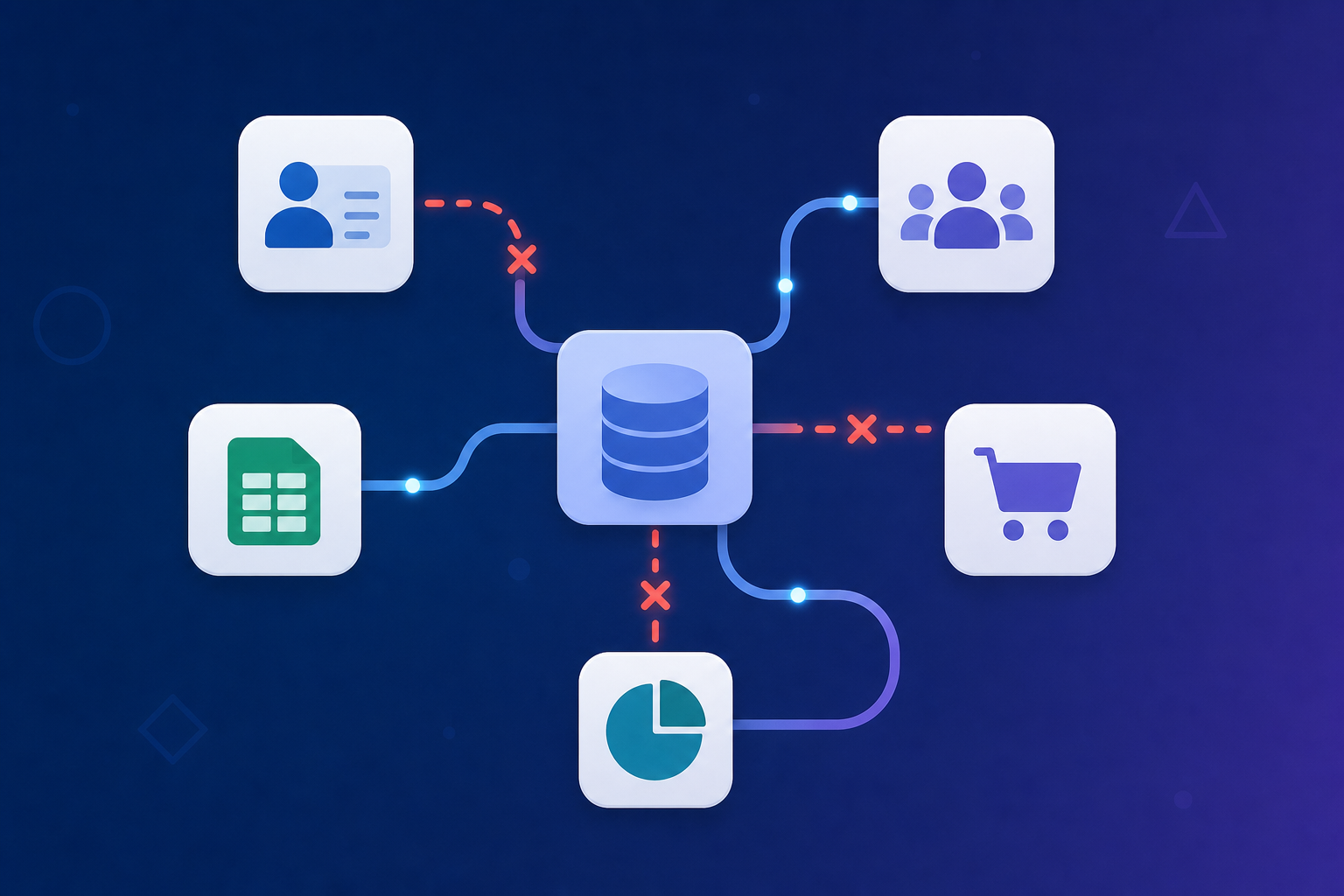
Coverage depth is the other issue. Merge covers HR, ATS, and CRM integrations reasonably well because those categories map cleanly to standardized objects. Verticals like accounting and ERP platforms, e-commerce, and facilities management are messier. On-premise systems like QuickBooks Desktop or Sage 300 CRE don't fit the unified API model at all. And as Truto's Merge vs. Apideck breakdown, the average company portfolio reached 305 SaaS applications in 2026, meaning the integration surface your customers expect keeps expanding beyond what any rigid schema can cover.
If your product lives outside Merge's core categories, or your enterprise buyers have compliance questions about where their data sits, you're already in the market for something different. Typically, this decision lands on the CPO or Head of Partnerships: the person fielding enterprise blockers and explaining to the board why a customer churned over a missing custom field.
Best Merge.dev Alternatives in October 2026
Each alternative below is assessed on architecture, pricing model, and how well it fits the embedded B2B SaaS use case.
1. hotglue (Editor's Pick)
hotglue is an embedded ETL layer built for B2B SaaS product teams. Where Merge focuses on HR and ATS categories, hotglue covers accounting, ERP, e-commerce, CRM, and payroll through 650+ open-source compatible connectors, including on-premise systems like QuickBooks Desktop and Sage 300 CRE that unified APIs simply cannot touch.
- Open-source connectors: inspect, fork, or extend any connector to fit your exact data model
- Python-powered transformation pipeline with full field mapping control
- Tenant-based pricing instead of per-linked-account, so unit economics stay predictable at scale, backed by a scalable integration architecture
- SOC 2 Type II compliant; never stores customer data
- New connectors stood up in 1-2 weeks from API access
Best for: Product teams that need vertical depth, custom data shaping, and a managed integration partner.
2. Paragon
Paragon is an embedded iPaaS targeting product teams that want prebuilt customer-facing integrations. Base fees are undisclosed; reported estimates run high five figures annually, with per-customer usage fees compounding on top. Teams without a dedicated integrations engineering function will feel the build burden quickly.
Best for: Well-resourced teams with dedicated engineering bandwidth. Less suited for teams expecting a managed service model.
3. Prismatic
Prismatic gives developer teams a TypeScript SDK and visual workflow builder for multi-tenant deployments. hotglue, by contrast, offers native app integration tools for developers that don't lock you into a closed connector catalog. The connector catalog is closed source, meaning custom connectors require building entirely inside Prismatic's proprietary SDK. Teams cannot inspect or fork connectors when gaps appear.
Best for: Developer teams comfortable building and owning connectors internally.
4. Nango
Nango is a source-available, code-first unified API and OAuth management layer. Engineering-heavy teams appreciate the open infrastructure control. As a unified API, it shares Merge's core architectural trade-off: normalized schemas that can obscure per-connector nuance and limit custom field access.
Best for: Engineering teams that want open-source infrastructure and can live within a unified schema model.
5. Kombo
Kombo is a tightly scoped unified API for HR and ATS integrations, with a clean drop-in authentication component. Its category focus is also its ceiling. If your product touches accounting, ERP, or e-commerce at all, Kombo is not the right fit.
Best for: HR tech products that only need HRIS and ATS connectivity.
6. Apideck
Apideck passes data through in real time instead of caching it, covering CRM, ATS, accounting, and e-commerce categories. Change detection on many integrations relies on polling up to every 24 hours, and the normalized schema approach shares Merge's limitations around custom fields.
Best for: Teams that prefer real-time passthrough over a cached model, with moderate customization needs.
7. Workato
Workato is an enterprise iPaaS built for internal IT and operations automation. It handles complex business process orchestration well, but was not designed for SaaS product teams embedding integrations for end customers, and that architectural mismatch shows up in practice.
Best for: Internal enterprise automation teams. Not a natural fit for product-led embedded integration use cases.
Feature Comparison: Merge.dev vs Top Alternatives
The table below puts the major differentiators side by side so you can see at a glance where each tool stands.
| Merge.dev | hotglue | Paragon | Prismatic | Nango | Kombo | Apideck | Workato | |
|---|---|---|---|---|---|---|---|---|
| Deployment Model | Unified API | Embedded ETL | Embedded iPaaS | Embedded iPaaS | Unified API | Unified API | Unified API | Enterprise iPaaS |
| Open-Source Connectors | No | Yes | No | No | Partial | No | No | No |
| On-Premise System Support | No | Yes | No | No | No | No | No | Limited |
| Python Transformation Layer | No | Yes | No | No | No | No | No | No |
| Tenant-Based Pricing | No | Yes | No | No | No | No | No | No |
| Vertical Coverage | HR, ATS, CRM | Accounting, ERP, e-commerce, CRM, payroll, HR | CRM, HR, general | General | CRM, HR, ATS | HR, ATS only | CRM, ATS, accounting, e-commerce | General enterprise |
A few things worth calling out here. hotglue is the only option in this group that checks every box: open-source connectors, on-premise support, a Python transformation layer, bi-directional integrations, and tenant-based pricing. That combination matters a lot for B2B SaaS teams who need flexibility without paying for seats they do not use. Kombo and Nango are narrow by design, which works if HR and ATS are your only targets. Workato covers the enterprise well but is priced and scoped for internal IT teams, not customer-facing integrations.
Why hotglue Is the Best Merge.dev Alternative
Merge.dev works well if your integration needs map cleanly onto HR, ATS, or CRM categories and you are moving fast in early stages. Once you scale past a few hundred accounts, per-linked-account pricing compounds quickly, and the rigid schema starts dropping custom fields your enterprise buyers care about.
hotglue is built for the use cases Merge cannot cover: vertical-specific accounting and ERP connectors, on-premise systems like QuickBooks Desktop and Sage 300 CRE, and full Python-powered data shaping without a normalized schema acting as a ceiling.
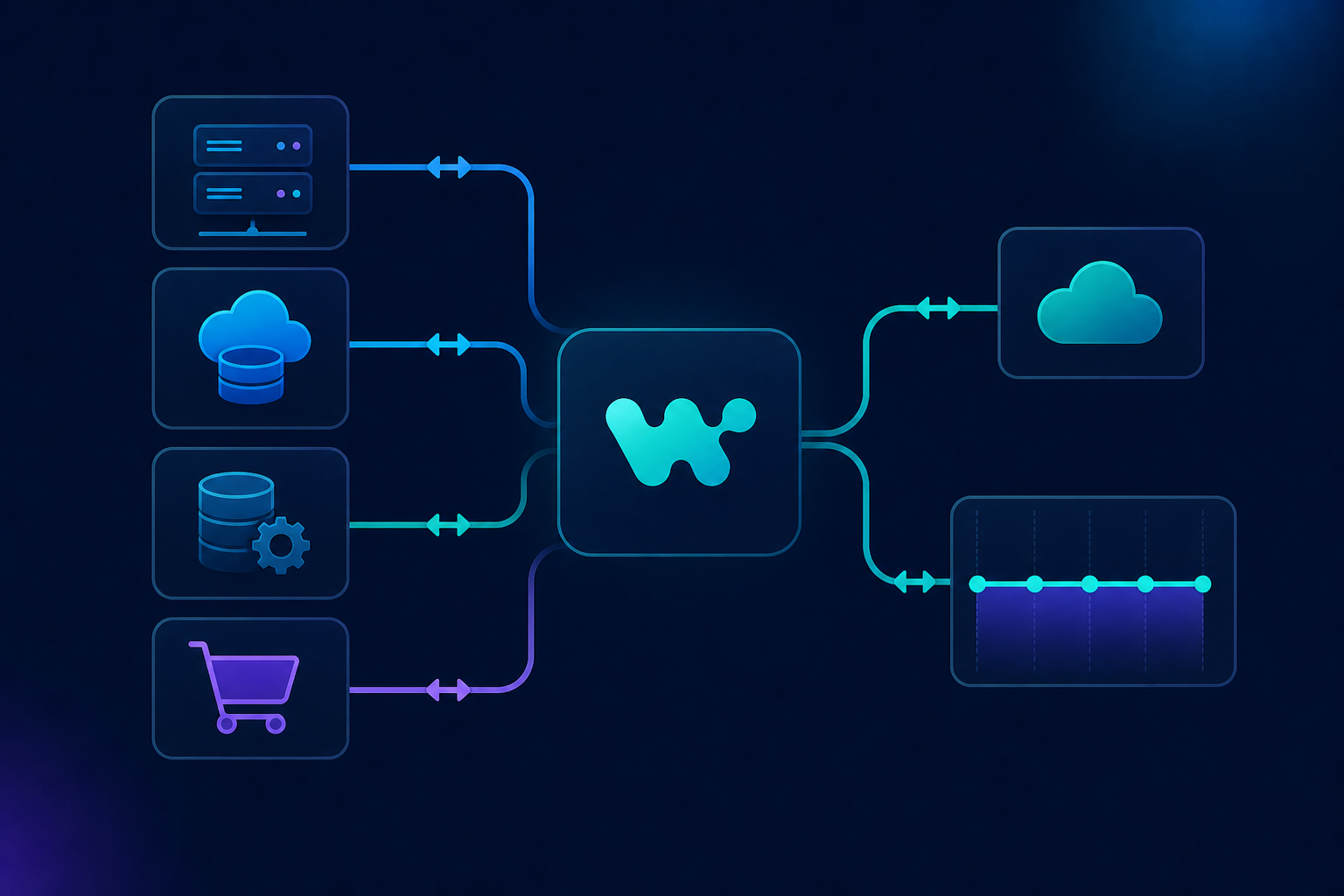
A few reasons engineering and product teams tend to make the switch:
- Tenant-based pricing keeps unit economics predictable as you grow, so you are not penalized for adding accounts at scale.
- Open-source connectors mean your team can inspect and extend anything without waiting on a vendor's roadmap to catch up, and managing your app integrations stays in your hands.
- No forced normalization means a customer's custom Salesforce object or Workday field arrives intact.
- All of this runs on hotglue's ETL infrastructure processing 10B records weekly.
If you want to see it in action, book a demo with the hotglue team.
Final Thoughts on Picking the Right Merge.dev Alternative
The best time to review your integration tooling is before pricing or schema limitations slow your team down. Your customers' data needs do not fit neatly into a normalized schema forever, and your unit economics should not punish you for growing. Book a demo with the hotglue team to see what a more flexible, predictably priced integration setup looks like in practice.
FAQ
Why do teams start looking for Merge.dev alternatives as they scale?
Merge.dev's per-linked-account pricing compounds quickly as your customer base grows, and its rigid common data model silently drops custom fields that enterprise buyers care about. Once you're past a few hundred accounts, those two issues tend to surface at the same time.
What should you look for in a Merge.dev replacement for vertical B2B SaaS products?
Look for tenant-based pricing (so your costs don't spike with each new account), open-source connectors you can inspect and extend, and support for on-premise systems like QuickBooks Desktop or Sage 300 CRE that unified API tools typically skip.
Can hotglue handle on-premise accounting systems that Merge.dev can't support?
Yes. hotglue supports QuickBooks Desktop via a Windows agent, Sage 300 CRE through a direct on-premise database connector, and Sage 200 via a cloud proxy, covering legacy systems that cloud-only unified APIs like Merge.dev cannot reach.
When does switching from Merge.dev to hotglue make the most sense?
The clearest signal is when enterprise customers are flagging compliance concerns about cached data, custom fields from their systems are getting dropped, or your Merge.dev bill is growing faster than your revenue because of per-linked-account pricing.
How is hotglue's pricing model different from Merge.dev's?
hotglue charges based on active tenants within a rolling 30-day window, so a single customer connecting to multiple connectors still counts as one tenant, not multiple. Merge.dev charges per linked account, which means your costs scale directly with customer count regardless of how efficiently they're connecting.