The days of every new customer activation running through an engineering deploy are worth questioning. When a customer is waiting to connect their Salesforce account and your next sprint is two weeks out, the calendar time is the real cost, not the engineering hours. There's a different model worth understanding before your next cohort gets stuck in that same queue.
TLDR:
- Customers who connect integrations within 14 days retain at 82% vs. 42% for those who take 30+ days
- The real cost of traditional embedded widgets is calendar time, not engineering hours: a 4-hour task can take 2 weeks to ship
- Magic links let your CS team get a customer connected via OAuth without a single engineering ticket or deploy
- Choose magic links when sprint availability is low; use embedded widgets when users reconnect integrations frequently from inside your app
- hotglue generates branded magic links tied to a tenant and flow config, letting CS activate customers without touching the UI layer
The Integration Bottleneck That Silently Slows Customer Activation
Customers who reach their first value moment inside 14 days retain at 82 percent at month 12. Customers who take longer than 30 days retain at 42 percent. Same product, same pricing, same support team.
That gap rarely comes from a bad product. It comes from a ticket sitting in a sprint backlog, patiently waiting its turn behind four other priorities, a bug that surfaced in prod, and whatever came up in the last all-hands.

The path from signed contract to "customer is live with their own data flowing" almost always runs through your engineering team. They have to embed the widget, configure the flow, handle OAuth, and QA the sync before a single customer can connect their QuickBooks or Salesforce account. Customer success knows the deal is at risk. Partnerships is fielding apologetic emails. Engineering is heads-down on a feature that was already three sprints overdue.
The bottleneck is availability, not intent.
Why Integration Time-to-Value Matters More Than Onboarding Speed
Finishing a product tour feels like progress. The customer has clicked through your UI, watched a demo video, maybe imported a CSV. But for most B2B SaaS products, none of that is the moment the product actually works. The moment it works is when their real data is flowing in from QuickBooks, Salesforce, or Shopify. Until then, they are using a shell of what they paid for.
Generic onboarding speed and integration time-to-value are not the same metric. A customer can complete your onboarding checklist in 20 minutes and still wait three weeks for their first sync to go live. Those three weeks are where churn risk accumulates quietly.
The 82 versus 42 percent retention gap cited above was not about onboarding completion. It was about reaching a first value moment. For integration-dependent products, that moment is a connected, live data pipeline. Faster onboarding without faster integration activation leaves that number unchanged.
The Traditional Embedded Widget Approach and Its Hidden Costs
The standard path to getting a customer connected to their first integration looks something like this:
- Engineering embeds the widget (or comparable auth component) into your product UI
- OAuth flows are wired up and tested across staging and production environments
- Edge cases get debugged: token refresh errors, scope mismatches, sandbox vs. live credential differences
- QA runs, a deploy happens, and only then can the first customer attempt to connect
Each step requires a developer. None of them are particularly hard, but all of them sit inside a sprint cycle with competing priorities — which, coincidentally, is also where good intentions go to quietly expire.
The real cost here is calendar time, not raw engineering hours. A task that takes four hours of actual work can still take two weeks to ship if it's queued behind a feature release or a bug sprint. Your customer waiting to connect their NetSuite account doesn't know or care about your sprint schedule.
"The bottleneck isn't your engineering team's ability. It's their availability."
For companies trying to onboard a cohort of ten or twenty customers simultaneously, each one at a different stage of the deployment queue, the math gets ugly fast.
What a Magic Link Is in the Context of Integration Onboarding
In authentication, a magic link is a one-time URL that logs a user in without a password. In integration onboarding, the concept is similar but the job is different: instead of proving identity, the link lets your customer connect their data source to your product without your engineering team embedding anything first.
Here is how it works with hotglue: a branded URL is generated and tied to a specific tenant and flow configuration. You send that link to your customer, they click it, complete OAuth with their QuickBooks or Salesforce account, and the connection is live without anyone touching the UI layer. The hotglue magic link feature was built as a supported deployment model alongside the embedded widget.
This pattern works well when:
- You are onboarding customers before the embedded widget is built or deployed, and waiting on a sprint would delay their go-live.
- You need to get a specific customer live urgently without creating a sprint dependency for your engineering team.
- Your product has no requirement for the integration UI to live inside your app at all.
The embedded widget is still the right call when the connection experience needs to feel fully native inside your product UI, or when customers will be managing and reconnecting integrations regularly from within your app. Magic links are a deployment option, not a universal replacement.
What Falls Off the Critical Path With Magic Links
When a customer needs to connect their QuickBooks Online account and you route them through a magic link instead of an embedded widget, your engineering team no longer has to:
- Embed the widget in your product UI, which typically means a frontend build, review cycle, and coordinated deploy.
- Configure and test OAuth callback URLs across sandbox and production environments.
- Handle token refresh logic, session state, and scope mismatches that only surface after a customer tries to connect.
- Write frontend tests and ship a release just to unblock one account.
None of those tasks disappear from your roadmap permanently. They stay queued for when you build the full native experience. They just fall off the critical path for getting that specific customer live this week.
Why This Matters for CS and Partnerships Teams
Take a Shopify sync as another example. Your CS team generates a magic link, sends it to the customer, and the customer completes the OAuth handshake directly. No deploy, no ticket, no sprint dependency. The sync starts running on schedule before your engineers have opened a single pull request.
That shift in ownership is what actually compresses calendar time. CS and partnerships teams can move a stuck customer from "waiting on engineering" to "connected and syncing" without filing a request or waiting for a release window.
Embedded Widget vs. Magic Link: Choosing the Right Deployment Model
Both deployment models solve the same core problem: getting your customers connected to their tools. The right call depends on your situation.
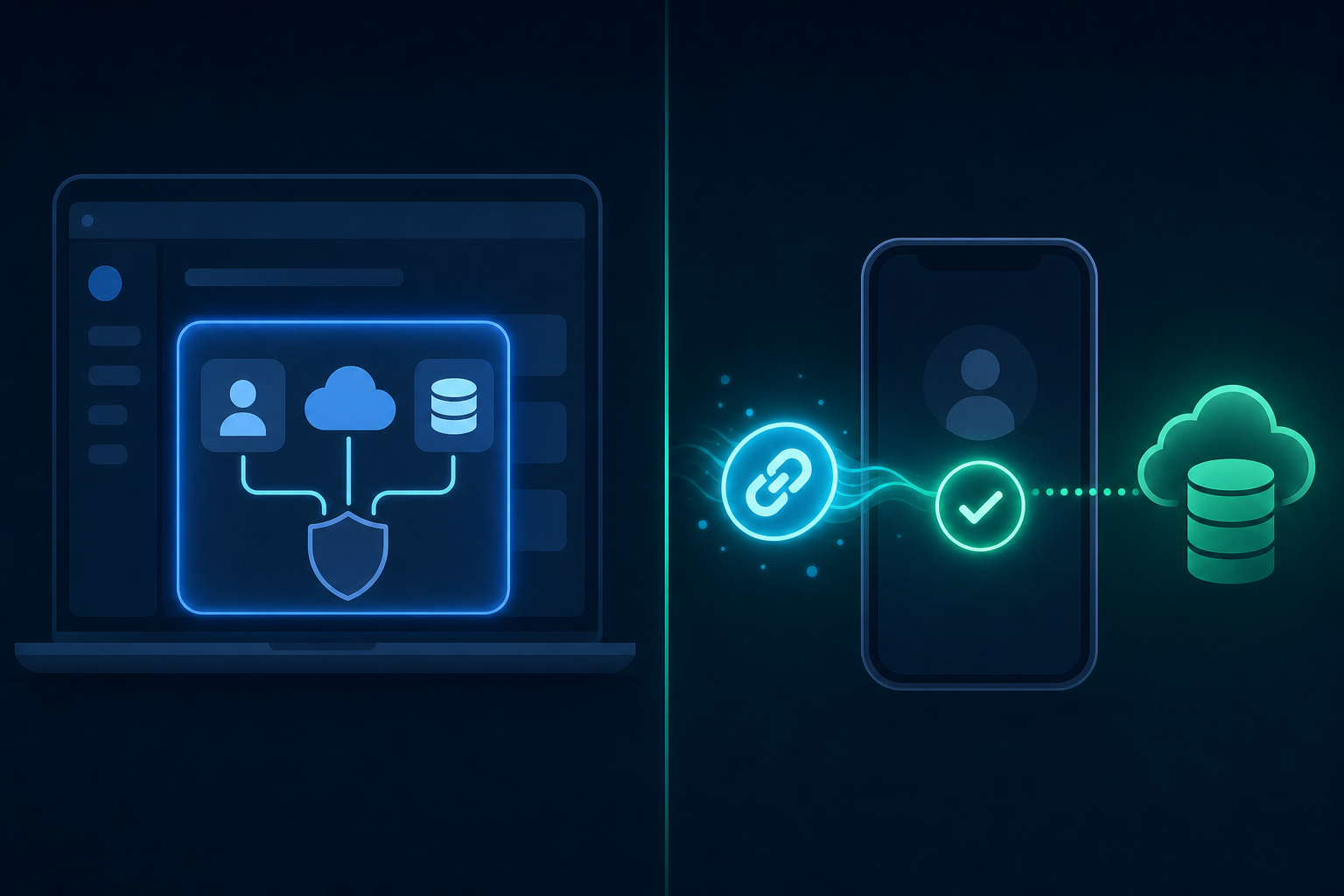
If your end users are technical and will manage their own integration connections from within your product, the embedded widget earns its setup cost. The native feel matters, especially for enterprise buyers who expect integrations to feel like a first-party feature.
Magic links make more sense when launch urgency is high and engineering availability is low. If you have five customers waiting to connect and no sprint room to ship a widget, a magic link gets them live now. You can build the full embedded experience later without penalizing customers already in your onboarding queue.
Hotglue supports white-label integrations under both models, so that factor alone does not force your hand. The real differentiator is whether end users need to return to the connection UI repeatedly, or whether they connect once and the integration just runs.
| Scenario | Recommended Model |
|---|---|
| Widget embedded in your product UI is a hard requirement | Embedded widget |
| Customer needs to go live before your next sprint | Magic link |
| End users will reconnect integrations frequently from inside your app | Embedded widget |
| CS team is managing a one-time customer activation | Magic link |
| White-label experience inside your product is required | Either |
| No engineering bandwidth for the next 2-4 weeks | Magic link |
How Faster Integration Onboarding Compounds at Scale
Getting one customer connected faster is satisfying. Getting your entire tenant base connected faster is a compounding business advantage.
63% of companies invest in integrations primarily to improve customer retention. That number makes sense when you consider how sticky a well-integrated product becomes. A customer whose QuickBooks data flows into your product daily has a switching cost that a customer using manual CSV exports simply does not. SaaS integration stickiness creates lock-in through utility, not contracts.
That retention benefit only arrives after the customer is actually connected. Every week a customer sits unconnected is a week their data habit forms somewhere else. At ten customers, delayed activation is a support headache. At ten thousand tenants, it becomes a systematic drag on net revenue retention.
The compounding works in both directions. Faster activation means more customers hit value sooner, retain longer, and expand into additional connectors. Slower activation means churn accumulates before the product ever had a fair shot.
Who Owns Integration Onboarding Inside a B2B SaaS Company
Nobody owns integration onboarding. Everybody assumes someone else does.
Engineering builds the connectors when they get to them. Product scopes requirements, sets prioritization, and writes tickets. Customer success tracks which customers are stuck and sends apologetic status updates. Partnerships surfaces the original request from an integration partner and then waits, sometimes for months, for something to ship.
The result is that a customer's path from "we need our Salesforce data flowing" to "it's live" travels through four different teams, none of whom have the authority or tooling to unblock it alone. Each handoff adds calendar time, and collectively, they add weeks.
Magic links shift a slice of that ownership to where it can actually move fast: customer success and partnerships. When those teams can generate a link, send it, and get a customer connected without filing an engineering ticket, the critical path shrinks to a single conversation.
How hotglue's Magic Link Feature Removes Engineering From the Critical Path
Generating a hotglue magic link takes minutes. A tenant ID, a flow configuration, and a branded URL is ready to send. Your customer clicks it, authenticates with their QuickBooks Online or Salesforce account via OAuth, and the connection is live — all without your engineering team writing a single line of code for that activation. You can dig into the specifics in hotglue's documentation.
This is production-grade infrastructure, not a workaround. hotglue runs 38,000+ active tenants on this infrastructure, processing roughly 10 billion records weekly. Teams using magic links are using a supported deployment model.
The white-label layer applies here too. Customers see your brand, not hotglue's. Whether you route them through an embedded widget later or keep the standalone magic link flow permanently, hotglue supports both models simultaneously, so you are not locked into one path for your entire customer base.
- A segment that needs a fully embedded UI inside your app gets the widget.
- A segment where CS is managing activation directly gets magic links.
Chargebee RevRec cited roughly a 90% reduction in integration implementation time after moving to hotglue. A meaningful share of that compression comes from removing the embed-first requirement for every new customer go-live. When your CS team can activate a new tenant without opening a ticket, the bottleneck simply stops existing for that customer.
Final Thoughts on Solving the Integration Onboarding Bottleneck in B2B SaaS
The retention gap is real, and the path to closing it starts with who controls the activation handoff. Magic links won't replace your embedded widget, but they can get your customers connected right now, before the sprint even starts. Take a look at hotglue's demo to see the setup in action.
FAQ
What's the fastest way to get a B2B SaaS customer live with their QuickBooks or Salesforce integration without waiting on a sprint?
Generate a hotglue magic link: it takes minutes, requires no frontend build, and lets your customer complete OAuth and start syncing before your engineering team opens a pull request. This works well when you have customers waiting to connect and no sprint room to ship an embedded widget; you can build the full native experience later without holding up activations now.
How do I let my SaaS customers connect their own ERP or CRM without my engineering team building each connector?
An embedded iPaaS like hotglue sits inside your product and handles authentication, OAuth, and data sync with third-party systems like NetSuite, Salesforce, and QuickBooks on your behalf. Your engineering team configures once instead of building and maintaining each connector from scratch. hotglue's library covers 650+ connectors, including on-premise systems like QuickBooks Desktop and Sage 300 CRE that most embedded integration providers skip entirely.
When should a CS or partnerships team use magic links for integration onboarding vs. waiting for the embedded widget?
Reach for a magic link when a customer needs to go live before your next sprint opens up — a CS-managed activation, a one-time connect, or a cohort you can't afford to leave sitting in a queue. Stick with the embedded widget when your end users will be managing or reconnecting integrations directly inside your product UI on a regular basis. If you're in any doubt, the decision table in the comparison section above maps the most common scenarios to the right model.
How does integration time to value affect retention, and why does the gap matter at scale?
Customers who reach their first value moment inside 14 days retain at 82% at month 12; those who take longer than 30 days retain at 42%. For integration-dependent products, that first value moment is a live, connected data pipeline, not a completed onboarding checklist. At ten customers, a delayed activation is a support headache; at thousands of tenants, it becomes a systematic drag on net revenue retention that compounds every quarter.
What is the difference between a unified API and an embedded iPaaS for SaaS integrations?
A unified API normalizes data from multiple tools into one schema your app reads from. That's useful for pulling data, but it abstracts away control over how syncs run and how data is shaped. An embedded iPaaS like hotglue sits inside your product, gives your team a configurable transformation layer (including Python-based logic via GluestickAI), and lets end users connect their own accounts directly, making it a better fit when you need per-tenant control, scheduling flexibility, or support for systems like on-premise ERPs that unified APIs rarely cover.